TELEMECANIQUE XS1M08PC410D Inductive Sensor M8-L61MM-STAINL
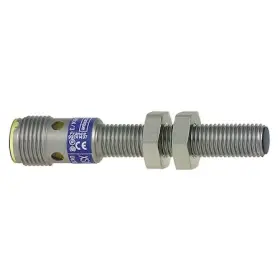
( Brand: Telemecanique ), ( Custom Bundle: No ), ( Country/region Of Manufacture: Fr ), ( Size: 62 Mm ), ( Material: Stainless Steel ), ( Type: Industrial Electrical Controls Automation Sensors Sensor Ac ), ( Weight: 2.2000 ), ( Length: 3.940 ), ( Features: Inductive Sensor Xs1 M8 L61mm Stainl ), ( Manufacturer Part Number: XS1M08PC410D )
Review TELEMECANIQUE Sensors Inductive Sensor Xs1
The Telemecanique XS1M08PC410D inductive sensor, also known as the XS1M8-L61mm-Stainless model, is a versatile and reliable sensing device designed for various industrial automation applications. This sensor, manufactured by Schneider Electric's Telemecanique brand, is constructed primarily from stainless steel, ensuring robustness and resistance to harsh environments.
The XS1M08PC410D sensor employs an inductive principle to detect the presence or absence of conductive materials. Inductive sensors operate by generating a high-frequency magnetic field within the sensor's active area. When a conductive object enters this area, the magnetic field is disrupted, causing a change in the sensor's output signal. This feature makes the XS1M08PC410D ideal for sensing metallic targets, such as ferrous and non-ferrous metals, or conductive liquids.
The sensor's dimensions are L61mm x H29mm x W21mm, and it features a threaded M8 connection for easy installation and integration into various automation systems. The XS1M08PC410D is designed to operate over a wide temperature range of -30 C to 85 C, ensuring reliable performance in various industrial conditions.
The Telemecanique XS1M08PC410D inductive sensor offers several advantages over other sensing technologies, including its high immunity to electromagnetic interference, ensuring stable and accurate performance even in environments with strong electromagnetic fields. Additionally, the sensor's long sensing range and adjustable sensitivity make it suitable for a wide range of applications, from small to large target detection.
The XS1M08PC410D sensor is also designed to provide a robust and long-lasting solution for industrial applications. It features a rugged and sealed design, making it resistant to dust, water, and other contaminants. Moreover, the sensor is easy to maintain, as it does not require any wear parts or adjustments during its operational life.
In summary, the Telemecanique XS1M08PC410D inductive sensor is a high-performance, versatile, and reliable sensing device designed for various industrial automation applications. Its stainless steel construction, inductive sensing principle, wide temperature range, and rugged design make it an excellent choice for sensing metallic targets or conductive liquids in harsh environments.
Inductive sensors from Telemecanique, specifically model XS1M08PC410D (xs1 m8-l61mm-stainless), are widely used in automation and industrial applications for detecting the presence or absence of ferromagnetic targets. Here are some pros and cons of using these sensors in your projects:
Pros:1. High degree of reliability: Inductive sensors offer reliable detection of ferromagnetic targets, even in harsh environments. They are resistant to dirt, water, and oil, making them suitable for use in manufacturing plants, assembly lines, and other industrial settings.
2. Long sensing range: Inductive sensors can detect targets from a considerable distance, typically ranging from a few millimeters to several centimeters. This makes them ideal for applications where precise positioning is not required.
3. Non-contact sensing: Inductive sensors do not make physical contact with the target, ensuring no wear and tear on the sensor over time. This results in a longer sensor lifespan and lower maintenance costs.
4. Versatile mounting options: These sensors can be mounted in various ways, including on the sides or bottom, allowing for flexible installation in different applications.
5. Wide operating temperature range: Inductive sensors can operate in a wide temperature range, from -40 C to 85 C, making them suitable for use in various industrial environments.
Cons:1. Limited to ferromagnetic targets: Inductive sensors can only detect ferromagnetic targets, which are materials that have magnetic properties. This limits their application to specific use cases.
2. Sensitivity to interference: Inductive sensors can be affected by electromagnetic interference (EMI) from nearby devices, resulting in false readings or missed detections.
3. Higher cost compared to other types of sensors: Inductive sensors tend to be more expensive than other types of sensors like optical or capacitive sensors. Their higher cost is due to their ability to detect ferromagnetic targets without physical contact and their rugged design for industrial applications.
In conclusion, Inductive sensors from Telemecanique, such as the XS1M08PC410D, offer high reliability, long sensing range, non-contact sensing, and versatile mounting options. However, they are limited to detecting ferromagnetic targets, are susceptible to electromagnetic interference, and have a higher cost compared to other types of sensors.
If your application involves detecting ferromagnetic targets in harsh environments with a long sensing range and high reliability, then inductive sensors are an excellent choice. However, if you need to detect non-ferromagnetic targets or are working in an environment with significant electromagnetic interference, you may want to consider other types of sensors, such as optical or capacitive sensors.
Overall, the decision to use inductive sensors depends on the specific requirements of your application. If your application fits the use case, the benefits of using inductive sensors, including their high reliability, long sensing range, and non-contact sensing, outweigh their limitations.
Details:
Electrical Boxes. Light Industrial. TELEMECANIQUE SENSORS XS1M08PC410D Inductive sensor XS1 M8-L61mm-stainl: M8 - L61mm stainl Details.
Electrical Outlet's. And Enclosures.
part #: xs1m08pc410d prices
- $71.95-$190.48
specifications plcmechanize:
- brand: Telemecanique
- custom bundle: No
- country/region of manufacture: Fr
- size: 62 Mm
- material: Stainless Steel
- type: Industrial Electrical Controls Automation Sensors Sensor Ac
- weight: 2.2000
- length: 3.940
- features: Inductive Sensor Xs1 M8 L61mm Stainl
- manufacturer part number: XS1M08PC410D
seller plcmechanize:
- city: USA
- # reviews: 1232585
- rating: 99.6%
general plcmechanize:
- Industrial Automation Motion Controls > PLCs HMIs > PLC Processors
- condition: New
shipping plcmechanize:
- cost: $0.00
- service: Standard
- type: Fixed
- class: Standard
- transit: 6-6 Days
returns plcmechanize:
- policy: Returns Accepted
- method: Money back
- time: 60 Days
- paid by: Seller
offer plcmechanize:
- options: Ship-to-home
- sold: 0
- started: May 24, 2025
- quantity: 7
- availability: In Stock
payments plcmechanize:
- wallet: Apple-pay
- other
- credit card: Visa
Telemecanique XS1M08PC410D Is Similar To:
- Schneider Electric Telemecanique Xs1n08pa349 Inductive Proximity Sensor (53.5% similar) Manufacturers warranty and support do not apply. Schneider electric Telemecanique XS1N08PA349 inductive proximity sensor: $15.00: .: XS1N08PA349 inductive proximity sensor XS1 12-24V dc 200MA m8 L33MM brass SN2...(August 3rd, 2024)
- Telemecanique Xy2ce2a250h7 9.00 Inch Emergency Cable Pull Switch Sensors Untested (40.8% similar) Untested as is. Could work fine but I have no way to test it so you are buying as is...(September 5th, 2024)
- Telemecanique Xuh-f02531 Lot Of 3 120v 48 62 Hz Sensor (40% similar) They look to have been used and are labeled 1, 2, 3 on the back. I don't have a way to fully test them and am happy take back if they aren't working. This is a lot of 3 Telemecanique UH-F02531 model 120V, 48/62 Hz sensors...(September 10th, 2024)
- Telemecanique Xum0apsal2 New Photoelectric Sensor (43.3% similar) There is writing on the packaging but unit brand new. Switch is new from industrial businesses stock room. This Telemecanique XUM0APSAL2 photoelectric sensor is a reliable addition to any industrial automation system...(December 14th, 2024)
- Telemecanique Sensors Xcslf3737413 Safety Monitoring Relay Panel (47.4% similar) Receptacles. Electrical outlet's. Range 13 degrees to 158 f, conduit size 1/2 in not, body material smack, head /special features dust tight and corrosion resistant indoor/outdoor enclosure, water details. Light industrial. Telemecanique sensors XCSLF3737413 safety...(February 22nd, 2025)
- Telemecanique Xub0bpsnl2 Photo-electric Sensor 274959 (43.2% similar) 2 meter cable. Telemecanique XUB0BPSNL2. 3 wire, 12-24V dc circuit supply. Manufacturer part number: XUB0BPSNL2...(April 18th, 2025)
- Telemecanique Sensors Xzcc12fdp40b Sensor Connector 150v 3amp Options (45.7% similar) Telemecanique sensors XZCC12FDP40B sensor connector 150V 3AMP options: options details. Light industrial. And enclosures. Electrical boxes. Receptacles. Electrical outlet's...(June 10th, 2025)
- Telemecanique Sensors Sga8179 Magnet Switch (49.1% similar) Telemecanique sensors SGA8179 magnet switch: cylindrical proximity sensor details. And enclosures. Receptacles. Electrical boxes. Electrical outlet's. Light industrial...(June 14th, 2025)
- Telemecanique Zcky43 Sensors Roller Lever Arm 4.41 Inch L (48.4% similar) Telemecanique sensors zack 43 roller lever ARM,4.41 in. XC, cecal, scam, arm length 1.57 in to 3.34 in, roller position front, DOA. Arm l: limit switch lever arm, actuator type adjustable roller, for use with mfr. Receptacles. 0.88 in, roller width 0.2 arm material steel...(June 21st, 2025)
- Telemecanique Xcsz02 Sensors Wide Mounting Actuating Key (52% similar) Electrical outlet's. Telemecanique sensors xcix 02 wide mounting actuating key: key, mounting, for use with SCSI, scab, xxix, SCSI details. And enclosures. Electrical boxes. Light industrial. Receptacles...(September 7th, 2025)
- Telemecanique Sensors Xcslf3737533 2nc 1no Safety Interlock Switch Ip 67 (39.2% similar) Telemecanique sensors XCSLF3737533 2NC/1NO safety interlock switch IP 67: switch, metal locking with power, contact form 1NO/2NC, connection type 1/2 in not conduit, ac rating 0.75 a 240 v, series xxiv, solenoid voltage 120 v ac, height 8.07 in, width 1.71 depth 2.01 IP66, IP67...(November 23rd, 2025)

3 offers $71.95–$190.48 USD
- New. Offer #1 priced at $143.99 + $0.00 delivery = $143.99* total. Electrical Boxes Inductive sensor XS1 M8 - L61mm - stainl.FREE SHIPPING
- New. Offer #2 priced at $71.95 + $0.00 delivery = $71.95* total. Shipped with USPS Ground Advantage. Telemecanique Sensors Inductive Proximity Sensor, 48 Vdc, 200 Ma.FREE SHIPPING
- New. Offer #3 priced at $190.48 + $8.99 delivery = $199.47* total. +$8.99 shipping